The Mark Journal
Why Seattle Summer Light Wakes You Before Your Alarm
Light slips into a room in five spots. Find each gap, seal it with the right blind feature, and finally sleep past dawn in a Seattle tower.
The Mark Journal
Light slips into a room in five spots. Find each gap, seal it with the right blind feature, and finally sleep past dawn in a Seattle tower.
You fly into Seattle in late June. You land tired, check in, and fall asleep around 11 p.m. Then at 4:40 a.m., your eyes pop open. The room is gray and getting brighter by the minute. Your body thinks it is morning, and it is not wrong.
Near the summer solstice, the sun rises in Seattle at about 5:10 a.m. The sky starts to glow around 40 minutes before that. Sunset does not come until after 9 p.m. That leaves a short stretch of true dark, and much of it passes while you are still out at dinner.
Light is the main signal your body clock uses to set itself. When early light reaches your eyes, your brain cuts back on melatonin, the hormone that keeps you sleepy. If you came from the East Coast, 5 a.m. here already feels like 8 a.m. to you, so that light keeps you up for good. If you came from Europe or Asia, the light pushes your clock at the wrong time. Jet lag that should fade in two days can drag on for four or five.
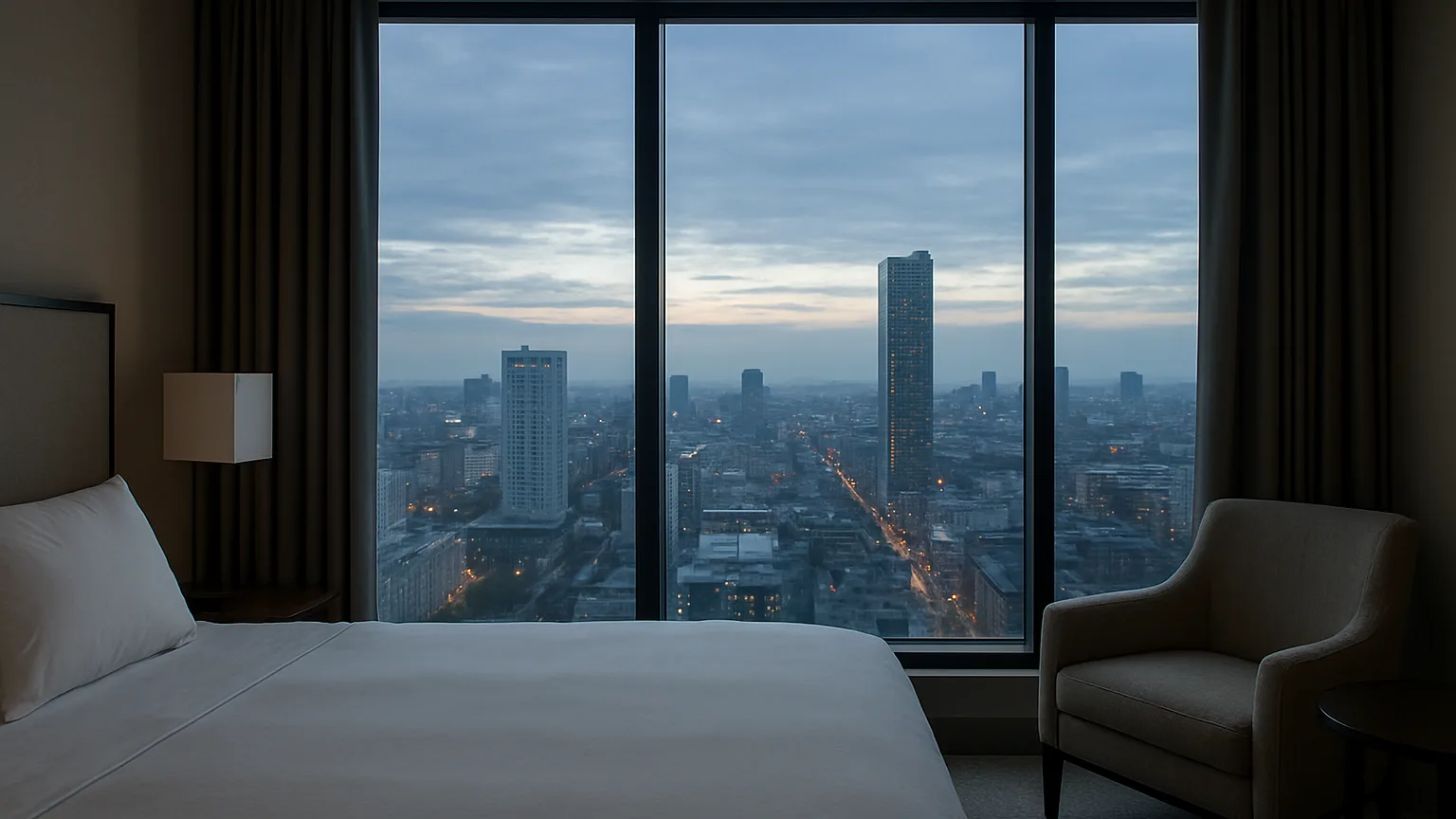
Down at street level, other buildings and trees block some of the dawn. Up on the 20th floor, nothing stands in the way. Many downtown towers also have floor-to-ceiling glass. That glass looks amazing at sunset, though anyone who has dealt with low sunset glare knows evening light brings its own trouble. At 4:45 a.m., it turns your bedroom into a light box.
This matters for buyers as much as guests. If you plan to turn a unit into steady rental income during the busy summer months, guests will notice the light fast. "Could not sleep past 5" is not a review any owner wants to read.
The good news is that early light is not a mystery. It gets in through a few gaps you can find and close.
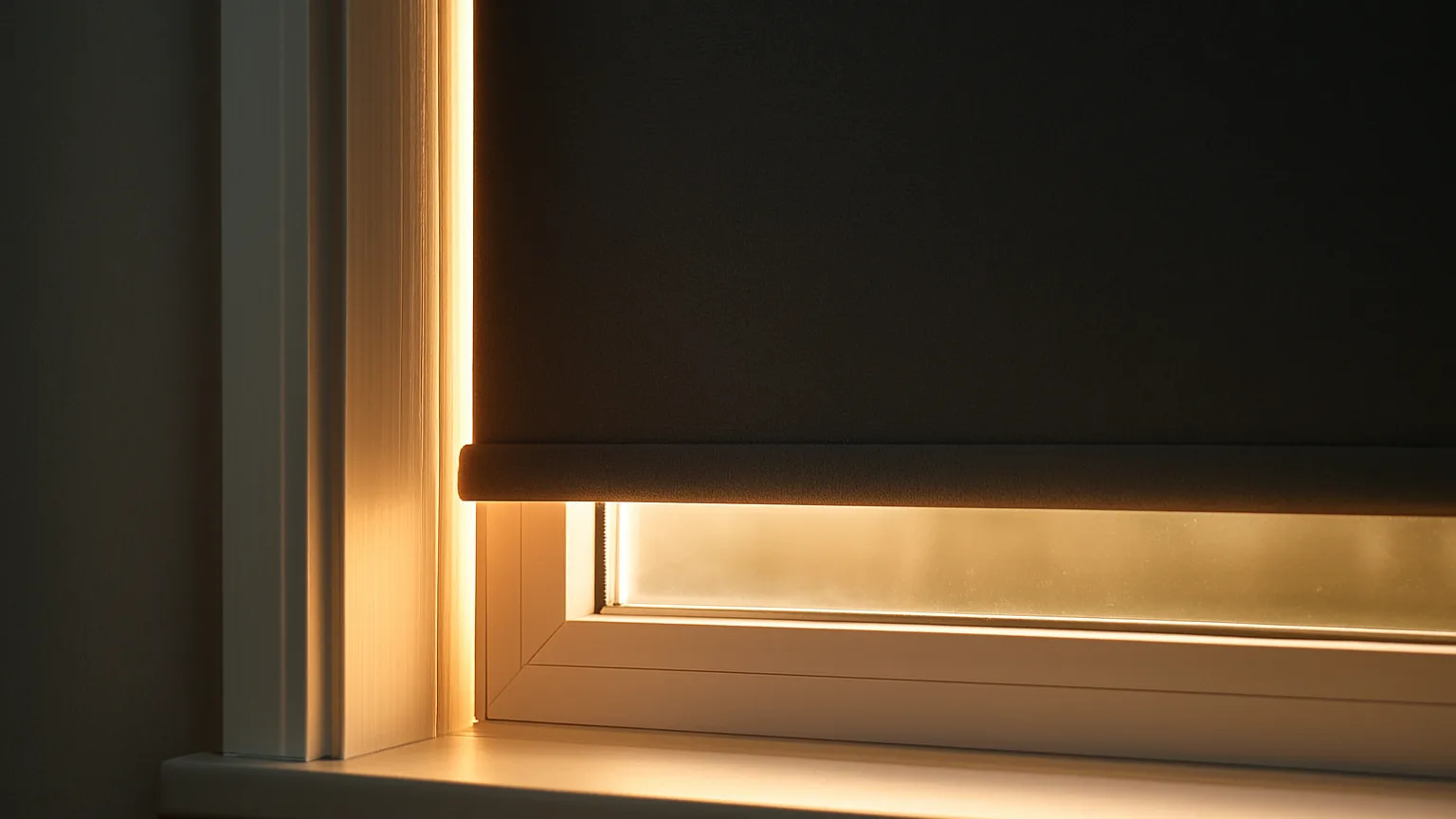
Most people think a blackout shade either works or it does not. In real life, a room goes dark only when every leak is closed. Stand in the room at dawn and look at the window. You will usually see light in one or more of these five spots.
A shade hung inside the window frame needs a small gap on each side so it can roll up and down. That gap is often a quarter inch or more. At dawn, it shows up as two bright lines running from top to bottom. This is the most common leak, and the hardest one to ignore.
The fix is side channels. These are thin tracks that mount on each side of the window. The edges of the shade slide inside them, so light has nowhere to go. Good channels have a soft brush or felt lining that blocks the last thin sliver.
The roller at the top of a shade leaves a gap between the fabric and the wall. Light pours through it and spills across the ceiling. A cassette or covered headrail wraps around the roller and closes that space. Mounting the shade outside the frame, a few inches above the glass, helps too.
If the bottom of the shade does not sit flat on the sill, you get a glowing strip under it. A heavy bottom bar keeps the fabric pulled tight. Some systems add a sill channel, so the shade lands in a track at the bottom as well as the sides.
Not every dark shade is a blackout shade. A room-darkening fabric cuts most light but still lets a soft glow through. A true blackout fabric has a coated layer that stops light fully. If you hold it up to a bright window and see the sun as a dim dot, it is not blackout. A separate blackout liner behind a pretty fabric gives you both style and dark.
Slatted blinds have small holes where the cords run through. They also have tiny gaps where slats overlap. Each one becomes a pinpoint of light at dawn.
"Faux wood blinds are a smart pick in Seattle because they shrug off damp air, but nobody should expect them to make a room pitch black," says Megan Larkin, window treatment specialist at Blinds Chalet. "The cord holes and slat edges let light through. In a bright bedroom, we suggest pairing them with a blackout shade or lined drape."
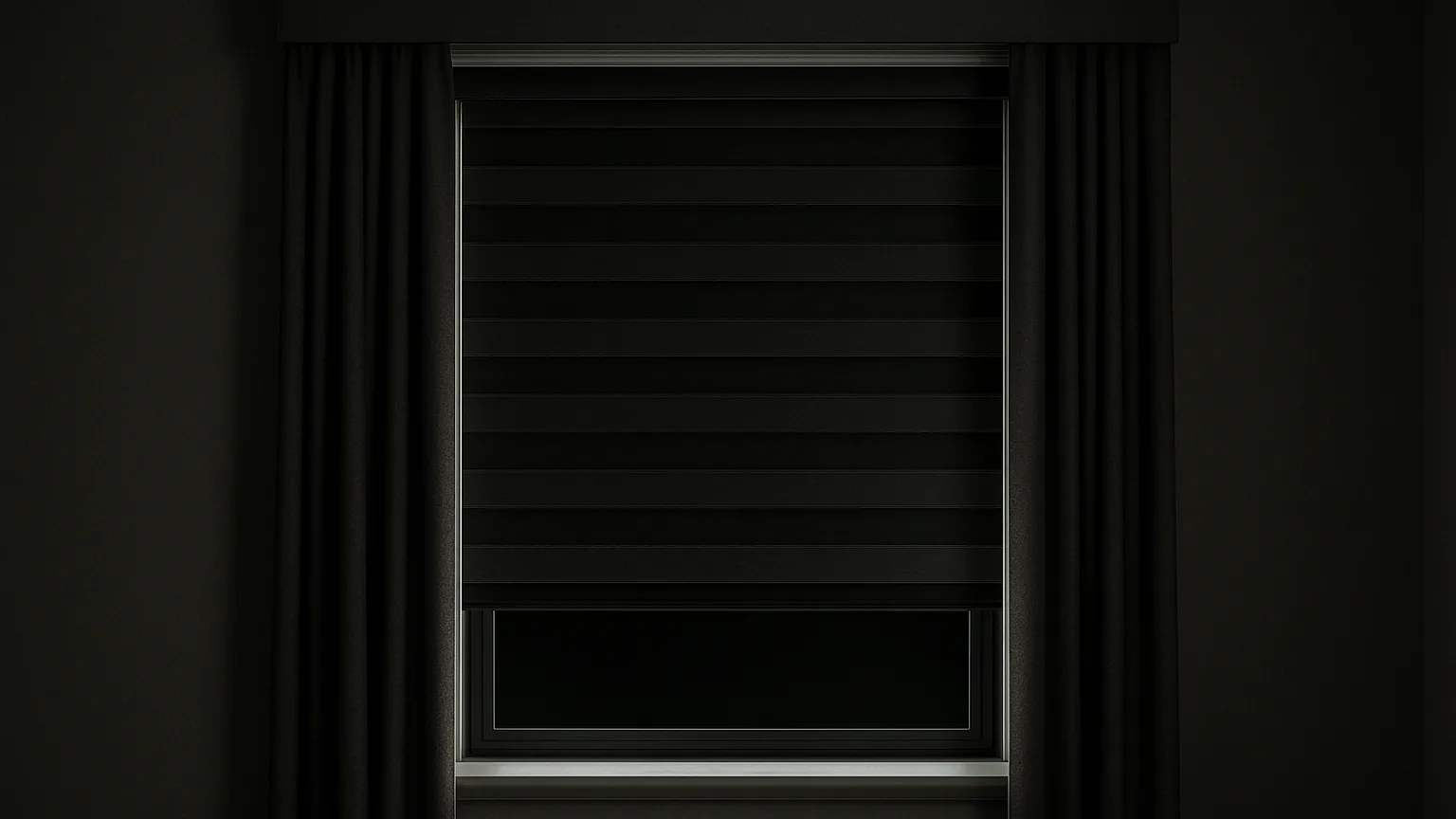
You cannot install side channels in a hotel room. But you can still win back a few hours of sleep with some simple moves.
Lower floors also tend to be darker at dawn. If you are a light sleeper, a room on floor 6 may serve you better than the penthouse view.
Visit the unit at more than one time of day if you can. A 2 p.m. showing in March tells you nothing about a 4:45 a.m. sunrise in June. Look at which way the bedroom faces. Northeast and east windows take the most early light.
Next, read the building rules on window coverings. Many towers require a uniform look from the street, often white or light gray on the outside. A blackout shade with a white back usually meets the rule while staying dark inside.
Think about the climate, too. Seattle bedrooms with big glass can collect moisture on cool nights, and that damp air is hard on some materials. Knowing how faux wood handles humidity can help you pick blinds for a bathroom or a second bedroom that will not warp or yellow.
Finally, keep safety in mind when you add heavy layers. Drapes and tracks should never block sprinkler heads, smoke detectors, or a window you might need to open in an emergency. Brushing up on building safety standards before your installer drills into the ceiling can save you a headache with the HOA.
For a high-rise bedroom with tall glass, one product rarely does it all. The most reliable setup has three parts. First, a blackout roller shade in side channels sits close to the glass. Second, a lined drape on a ceiling track hangs in front and runs a few inches past the window on each side. Third, a motor lets you lower everything on a timer, so the room is dark before you even get home from dinner. If you are remodeling, planning the wiring for motorized blinds before the walls are closed up saves a lot of patching later. Motorized shades also stop guests from leaving the room bright by mistake.
Seattle summers give you long, bright evenings, and the price is a sky that wakes up before 4:45 a.m. Early light tells your brain to stop making melatonin, which cuts sleep short and stretches out jet lag. High floors and big glass make it worse. Light gets in at five spots: the sides, the top, the bottom, through the fabric, and through holes in slatted blinds. Side channels, a cassette headrail, a weighted bottom bar, true blackout fabric, and smart layers close each one.
Hotel guests can still sleep well with a west-facing room, a couple of binder clips, and a good eye mask. Condo buyers should check which way the bedroom faces, follow building rules, pick materials that suit damp air, and plan a layered setup that keeps the room dark all summer. Close every gap, and the long days of a Seattle summer become a gift instead of an alarm clock.
Keep Reading


© 2026 The Mark Seattle. All Rights Reserved.